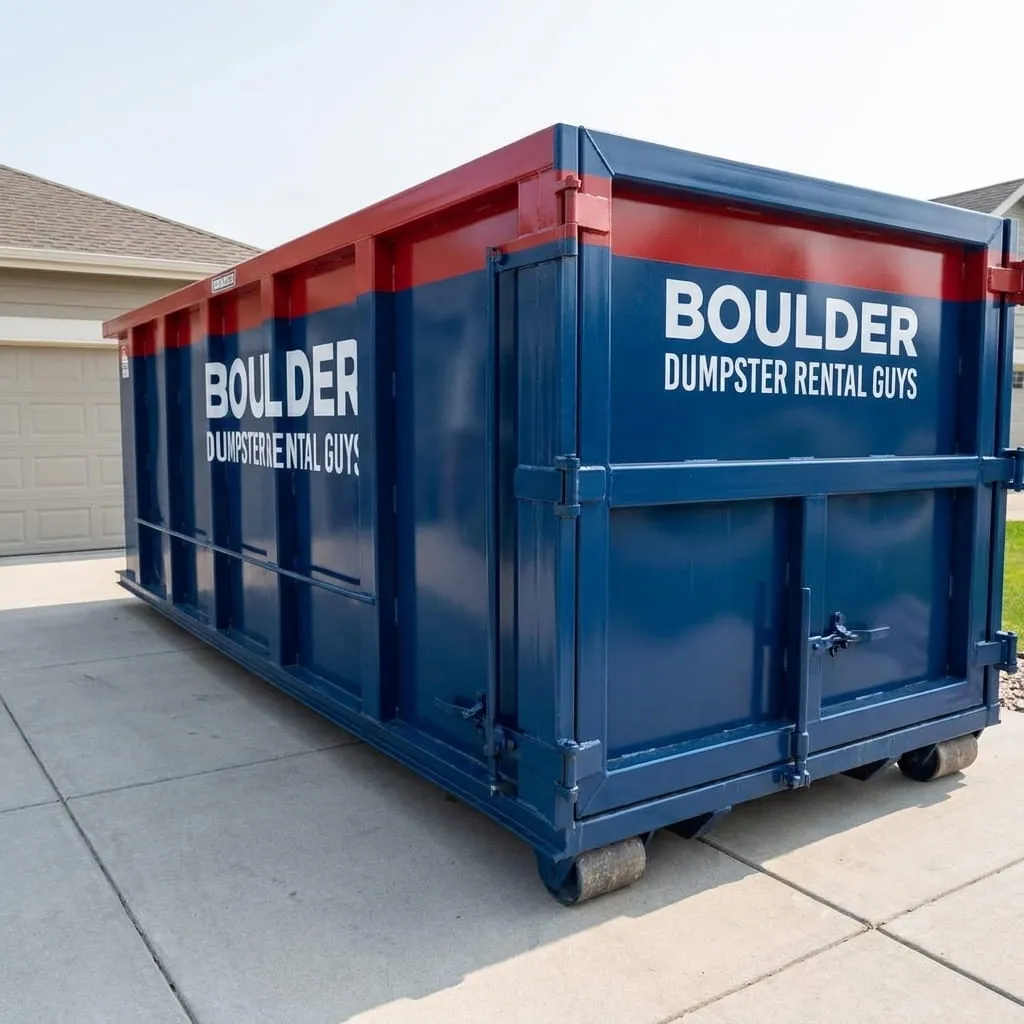
I've been hauling roll-offs around Boulder County long enough to remember when "where does it all go?" was a question almost nobody asked. These days it's one of the first things people bring up when they call. Folks here care. They want the kitchen tear-out gone, sure, but they also want to know the old cabinets aren't just getting buried in a hole somewhere. Fair question. Boulder is one of the more demanding places in Colorado when it comes to keeping stuff out of the landfill, and if you're renting a container, it helps to understand how the whole system actually works.
So let me walk you through it the way I'd explain it to a neighbor over the tailgate.
Where your debris actually goes after we haul it
A lot of people picture a dumpster getting driven straight to the dump and tipped over a cliff. That's not how it works around here, at least not for most loads. When we pick up a full roll-off, it typically heads to a transfer station or a materials recovery operation first. There, loads get evaluated. Clean, single-material loads are the easy wins. A box full of nothing but scrap metal, or nothing but cardboard, or nothing but broken concrete, can go almost directly into a recycling stream because there's little sorting left to do.
Mixed construction and demolition debris, what the industry calls C&D, is trickier. That's the load with drywall scraps, wood, some carpet, a little metal, packaging, and who-knows-what all jumbled together. Some of that gets pulled apart at sorting facilities, either by hand along a conveyor or with magnets, screens, and air classifiers that separate materials by weight and size. Steel gets grabbed by magnets. Heavier rubble drops out on shaker screens. Lighter stuff like film plastic and paper gets blown off. What can't be recovered economically is the fraction that ends up landfilled.
Here's the honest part: the cleaner and more separated your material is when it goes in the box, the more of it gets diverted. That's not marketing. It's just physics and economics. A commingled load costs more to process and recovers less. So the choices you make loading the container genuinely change the outcome.
What's genuinely recyclable out of a typical project
Not everything can be recycled, and I'd rather be straight with you than pretend otherwise. But a surprising amount of a renovation or cleanout can be diverted if you know what you're looking at.
Metal. This is the champion. Steel, aluminum, copper, old appliances, cast iron tubs, fencing, rebar, pipe, gutters. Metal recycles endlessly and there's real market demand for it. If you've got a meaningful amount of scrap, it's worth keeping it separate. Some of it even has cash value at a scrap yard.
Cardboard. New construction and remodels generate mountains of it. Appliance boxes, flooring cartons, fixture packaging. Flatten it, keep it dry, keep it clean, and it recycles readily. Wet or food-soiled cardboard is a different story, so it pays to stage it out of the weather.
Clean wood. Untreated, unpainted dimensional lumber, pallets, plywood scraps, and framing offcuts can often be ground into mulch, boiler fuel, or engineered wood feedstock. The catch is the word clean. Once wood is painted, stained heavily, pressure-treated (that greenish tint), or full of hardware, it usually falls out of the clean-wood stream.
Concrete, brick, and asphalt. Rubble is one of the most recyclable things we handle. Crushed concrete becomes road base and aggregate. If you're demoing a patio, an old driveway, or a foundation, keeping that material clean, meaning no dirt-caked chunks mixed with trash, makes it easy to recycle. Heads up though: concrete is heavy, and clean loads of it are often best in a dedicated smaller container.
Beyond those big four, plenty of other things divert well depending on the facility and the day: clean drywall, certain rigid plastics, carpet through specialty programs, and yard debris that goes to compost rather than the landfill.
Boulder's zero-waste push, in plain terms
Boulder has been out front on this stuff for years. The city adopted a Universal Zero Waste ordinance, and the short version is that Boulder has set genuinely ambitious diversion goals and built rules to back them up. Recycling and composting aren't treated as optional add-ons here the way they are in a lot of towns. They're baked into how waste service is supposed to work for homes and businesses alike.
For construction and demolition specifically, Boulder has C&D recycling requirements tied to permitted projects. Broadly speaking, certain construction, remodel, and demolition jobs are expected to divert a meaningful share of their debris from the landfill, and to document it. That can mean recycling readily recoverable materials, managing them through approved facilities, and in some cases keeping records that show where the material went. The details, thresholds, and paperwork have evolved over the years, and Boulder County and the City of Boulder each have their own programs and their own fine print.
I want to be careful here, because I'm a dumpster guy, not a code official. The specifics change, they vary by whether your project is inside city limits or elsewhere in the county, and they depend on your permit type and project size. Before you plan a build or demo around any particular requirement, confirm the current rules directly with the City of Boulder and Boulder County. They publish the up-to-date thresholds, accepted facilities, and any reporting forms. What I can tell you from the field is that these requirements are real, they get taken seriously here, and it's far easier to plan for diversion from day one than to scramble at final inspection.
Not sure how to set up your project to hit Boulder's diversion goals without slowing the job down? Give us a call at (970) 601-7836 and we'll talk through the right container setup for what you're building.
Donate before you dumpster
Some of the best waste reduction never touches a roll-off at all. Before a remodel, walk the space and ask what still has life in it. Cabinets that are dated but solid, working appliances, interior doors, light fixtures, unused tile, extra lumber, even quality hardware. In and around Boulder there are reuse centers and nonprofits that take usable building materials and resell them, which keeps the stuff in circulation and often gets you a donation receipt.
It does take a little planning. Donation outlets generally want items in decent shape, and some will do pickups for larger loads while others need you to deliver. A careful "deconstruction" of cabinets or fixtures, rather than a sledgehammer approach, preserves resale value. If your project is more of a full cleanout with furniture and household goods mixed in, that's territory where our junk removal service can help sort the donate-worthy items from the true trash before anything gets tossed.
Reduce the waste before it starts
The cheapest debris to haul is the debris you never create. A few habits make a real difference on a job:
- Measure and order tighter. Over-ordering materials is one of the biggest sources of jobsite waste. A little more planning up front means fewer full sheets and boxes heading to the box.
- Keep recyclables separated on site. Even a couple of labeled zones, one for metal, one for clean wood, one for cardboard, dramatically improves how much gets diverted. It's not extra work so much as organized work.
- Protect materials from weather. Wet cardboard and rain-soaked wood lose recyclability fast. Staging under cover keeps options open.
- Right-size the container. An oversized box invites people to fill it with anything, including stuff that should've been recycled or donated. Matching the container to the actual job keeps waste honest.
- Think in materials, not just "trash." Once the crew starts seeing metal, wood, and rubble as separate streams instead of one gray pile, diversion happens almost automatically.
None of this is heroic. It's just being a little intentional, and over the course of a project it adds up to real tonnage kept out of the landfill and, frequently, a smaller disposal bill for you.
How we try to help
We're a local outfit, so we know the transfer stations, the reuse centers, and the general lay of the land here. When you rent from us, we're happy to talk through how to set up separated loads, which materials are worth keeping clean, and roughly how things flow downstream once we haul them. We can't promise a specific facility will accept a specific load on a specific day, that's just the reality of the recycling market, but we can point you in a sensible direction and help you avoid contaminating an otherwise clean load.
If you want to know more about who we are and how we operate around Boulder, take a look at our about page. And when you're ready to plan a project, or you just have questions about what goes where, reach out and we'll get you sorted.
Boulder asks more of us than most places when it comes to waste, and honestly, I think that's a good thing. A remodel or a cleanout doesn't have to mean a mountain of buried debris. With a little forethought, a lot of it becomes road base, new steel, mulch, or somebody else's kitchen. That's a better outcome for the county, and usually for your wallet too.

Founder, Boulder Dumpster Rental Guys — sharing straight advice from more than 15 years of local hauling experience.
Frequently Asked Questions
Does everything in my dumpster get recycled?
No, and I won't pretend otherwise. How much gets diverted depends heavily on how the load is packed. Clean, separated materials like metal, cardboard, clean wood, and concrete recycle well. Jumbled mixed debris gets sorted at a facility where magnets, screens, and hand-picking recover what they can, but some fraction still ends up landfilled. The cleaner your load, the more gets diverted.
What materials from a remodel are actually recyclable in Boulder?
The big four are metal (steel, aluminum, copper, appliances), cardboard that's kept clean and dry, clean untreated wood, and concrete, brick, or asphalt rubble. Depending on the facility, clean drywall, some rigid plastics, carpet through special programs, and yard debris for compost can also divert. Painted, stained, or pressure-treated wood usually falls out of the clean-wood stream.
Does Boulder require construction debris to be recycled?
Boulder has a Universal Zero Waste ordinance and C&D recycling requirements tied to many permitted construction, remodel, and demolition projects, generally expecting a meaningful share of debris to be diverted and documented. The exact thresholds, accepted facilities, and paperwork vary by project type and location, and they change over time. Confirm the current rules directly with the City of Boulder and Boulder County before you plan around them.
Can I donate building materials instead of throwing them away?
Often, yes. Working appliances, solid cabinets, interior doors, fixtures, unused tile, and extra lumber can go to local reuse centers and nonprofits that resell building materials, sometimes with a donation receipt. Items usually need to be in decent shape, and a careful deconstruction preserves resale value better than a sledgehammer. For mixed cleanouts, our junk removal service can help separate donate-worthy items from real trash.
How can I cut down on waste before renting a dumpster?
Order materials tighter to avoid over-buying, keep recyclables separated on site with a few labeled zones, protect cardboard and wood from rain so they stay recyclable, and right-size your container so it doesn't invite tossing recyclable material. Thinking in separate material streams instead of one gray pile makes diversion happen almost automatically and often lowers your disposal cost.