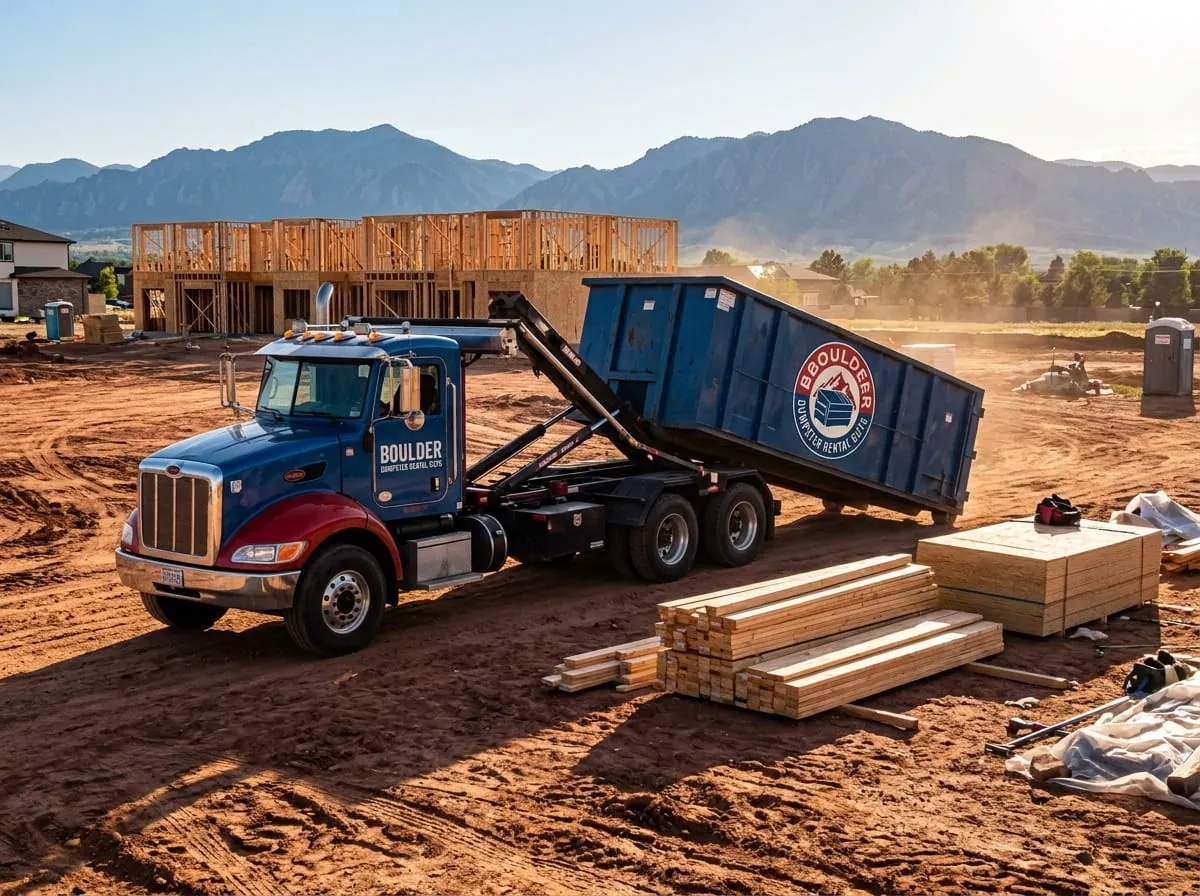
The first question almost every Boulder homeowner asks me is some version of "what's this going to run me?" It's a fair question, and it deserves a real answer instead of a runaround. The honest reply is that a dumpster in Boulder County usually lands somewhere between a couple hundred and several hundred dollars depending on the size you pick, how heavy your load is, and how long the can sits in your driveway. But that range is only useful if you understand what's moving the needle inside it.
I've been dropping roll-off containers around Boulder, Gunbarrel, Niwot, and out toward Lyons for years now. In that time I've watched people overpay because they guessed at the size, and I've watched people nail the price to the dollar because they asked two or three smart questions up front. This guide is meant to put you in the second group.
What a flat rate actually includes
When we quote you a flat rate, we're bundling several costs into one number so you're not doing math on the back of an envelope. A proper flat-rate quote in the Boulder area covers delivery of the container to your address, a set rental period (commonly seven to ten days), pickup and haul-away when you're done, and disposal up to a specified weight limit at the landfill or transfer station. That last piece, the weight allowance, is the part people forget about, and it's the single biggest source of surprise charges in this business.
So a flat rate is genuinely flat, as long as you stay inside two lines: the weight cap and the rental window. Cross either one and you're into extras. Nothing shady about it, it's just how the economics work. The landfill charges us by the ton, and every extra day a container is out is a day it can't earn on another job. A good operator will state both limits out loud before you book. If a company won't tell you the weight cap in plain numbers, that's your cue to keep dialing.
The three things that drive your price
Almost every dollar you'll spend comes down to size, weight, and time. Get those three right and the quote practically writes itself.
1. Container size
Size is the biggest lever, and it's the one most people misjudge in both directions. Roll-offs are measured in cubic yards, most commonly 10, 15, 20, 30, and 40. A 10-yard is a small footprint built for heavy, dense debris like concrete, dirt, or roofing shingles. A 20-yard is the workhorse for the average Boulder project, a garage cleanout, a bathroom remodel, a mid-sized landscaping haul, and it's the size I recommend more than any other. Step up to a 30 or 40 for whole-house cleanouts, new construction, or big deck teardowns.
Here's the trap. A bigger can costs more up front, but renting a container that's too small costs more in the end, because you either overfill it (which we legally can't haul) or you end up ordering a second one and paying a second delivery fee. When you're genuinely torn between two sizes, size up. It's almost always cheaper than a swap. If you want to see how the dimensions and capacities compare before you commit, our 20-yard dumpster page lays out exactly what fits.
2. Debris weight
This is where Boulder's terrain and soil actually matter to your wallet. A container full of cardboard and old furniture weighs a fraction of the same container packed with concrete, brick, tile, or wet dirt. Every flat rate includes a tonnage allowance, and if you blow past it, you pay an overage, typically billed per ton over the cap.
Along the Front Range we deal with a lot of heavy material, flagstone patios, old concrete walkways, clay-heavy soil that soaks up snowmelt and gets shockingly dense. If your project is heavy by nature, tell your operator up front. We'd rather put you in the right container with the right weight plan than hit you with a bill you didn't see coming. Sometimes the smart move on a concrete-only job is a smaller can with a heavy-material rate, because volume runs out long before you'd ever fill a 20-yard with rock.
3. Rental days
Time is the quiet third factor. Most flat rates bake in a rental window, often a week to ten days. Finish early and return the can and everybody's happy. Need it for three weeks because your contractor's schedule slipped? That's extra-day fees, usually a modest per-day charge. Not a penalty, just rent.
The mountain-town wrinkle here is weather. A spring project in Boulder can stall out fast when a late snow rolls in off the foothills, and a driveway full of mud isn't a driveway anyone wants a loaded truck backing into. Build a little buffer into your timeline and you'll rarely trip the extra-day charge.
Overage and extra-day fees, explained plainly
Let me demystify the two fees that catch people. An overage fee kicks in when your load weighs more than the tonnage included in your flat rate. It's charged per ton over, and the rate is set by what the landfill charges us plus handling. An extra-day fee applies when you keep the container past your included rental period, charged per day. Both are avoidable with a little planning, and both should be disclosed to you before you ever sign anything.
There are also material restrictions that carry their own disposal costs no matter who you rent from, tires, appliances with refrigerant, mattresses in some facilities, paint, chemicals, and electronics. These can't just go in the can. Ask what your local hauler accepts and what needs special handling. A five-minute conversation beats a return trip.
Not sure which size fits your project or what it'll cost? Call Boulder Dumpster Rental Guys at (970) 601-7836 and we'll give you a straight, all-in number before you book, no guessing, no fine print.
How to keep your bill predictable
Predictable pricing isn't luck, it's a few habits. Here's what the customers with zero surprise charges tend to do.
- Right-size the first time. Describe your project honestly, room dimensions, rough volume, type of debris, and let the operator recommend. Guessing small to save twenty bucks usually backfires.
- Separate the heavy stuff. If you've got clean concrete, brick, or dirt, mention it. It often qualifies for a dedicated heavy-material load that's cheaper than mixing it into a general debris can and eating an overage.
- Load smart. Break down boxes, stack flat items, fill voids. Air is the enemy of a good load. You paid for cubic yards, so use them.
- Watch the fill line. Every container has a legal fill height. Mounded loads can't be hauled safely or legally, and an overloaded can means a repack and a delay.
- Mind your window. Know your included rental days and aim to finish inside them. If you know you'll need longer, say so up front, weekly rates usually beat scrambling for day rates later.
- Ask about placement. A container on your own driveway is simple. One that needs to sit on a public street in the City of Boulder may require a permit, and that's a cost and a lead time worth knowing before delivery day.
A little Boulder-area context
Pricing here isn't identical to Denver or the Eastern Plains, and there are honest reasons why. Boulder County disposal fees, the drive time from the transfer station to neighborhoods tucked up against the foothills, tighter access on older streets in places like Mapleton Hill, and seasonal demand swings all factor in. Spring and early summer are our busiest stretch, remodels, landscaping, and cleanouts all hit at once, so booking a few days ahead gets you a better slot and, often, a better rate than a last-minute scramble.
Access matters more here than flatlanders expect. Narrow foothill driveways, low-hanging trees, tight cul-de-sacs, and steep grades all shape which truck and container we can bring. When you call, describe your street and your driveway. It helps us send the right equipment the first time and keeps you off the hook for a failed delivery.
If you're weighing whether a roll-off is even the right tool for your job, or you want to understand the full service before you commit, our roll-off dumpster rental page walks through how the process works from drop-off to haul-away.
The bottom line
A dumpster in Boulder should never feel like a mystery. The flat rate covers delivery, a set number of days, pickup, and disposal up to a weight cap. Your final number moves with the size you choose, how heavy your load runs, and how long you keep the can. Stay inside the weight and the window and the flat rate stays flat. Every one of the fees that trips people up, overage, extra days, special materials, is avoidable with one honest conversation before you book.
That conversation is free, and we're happy to have it. Tell us what you're clearing out, we'll tell you the size, the weight plan, and the all-in price, and you can decide from there. When you're ready to lock in a delivery or you just want a real quote for your specific job, reach out to us here and we'll take it from there.
Founder, Boulder Dumpster Rental Guys — sharing straight advice from more than 15 years of local hauling experience.
Frequently Asked Questions
How much does it cost to rent a dumpster in Boulder, CO?
Most residential dumpster rentals in the Boulder area fall between roughly a couple hundred and several hundred dollars, depending on container size, how heavy your debris is, and how many days you keep it. A 20-yard for a typical home project sits in the middle of that range. The best way to get an exact, all-in number is to describe your project and get a flat-rate quote before booking.
What does a flat-rate dumpster price include?
A proper flat rate covers delivery to your address, a set rental period (commonly seven to ten days), pickup and haul-away, and disposal up to a stated weight limit. The two lines to watch are the weight cap and the rental window, staying inside both keeps the flat rate flat. Always ask your operator to state the tonnage allowance in plain numbers before you book.
What are overage and extra-day fees?
An overage fee applies when your load weighs more than the tonnage included in your flat rate, billed per ton over the cap. An extra-day fee applies when you keep the container past your included rental period, billed per day. Neither is a penalty, they reflect landfill tonnage charges and rental time. Both are easy to avoid with the right size and a realistic timeline, and both should be disclosed up front.
What size dumpster do I need for a Boulder home project?
For most single-room remodels, garage cleanouts, and mid-sized landscaping jobs, a 20-yard is the reliable choice. Go smaller (10 or 15 yard) for heavy, dense debris like concrete or dirt where you hit the weight limit before you fill the space. Step up to a 30 or 40 yard for whole-house cleanouts or new construction. When you're unsure between two sizes, size up, it's almost always cheaper than ordering a second can.
Do I need a permit to place a dumpster in Boulder?
If the container sits entirely on your own private driveway or property, you typically don't need a permit. If it has to sit on a public street, the City of Boulder may require a permit, which carries a cost and a lead time. Mention your intended placement when you call so we can flag any permit need before delivery day and keep your schedule on track.