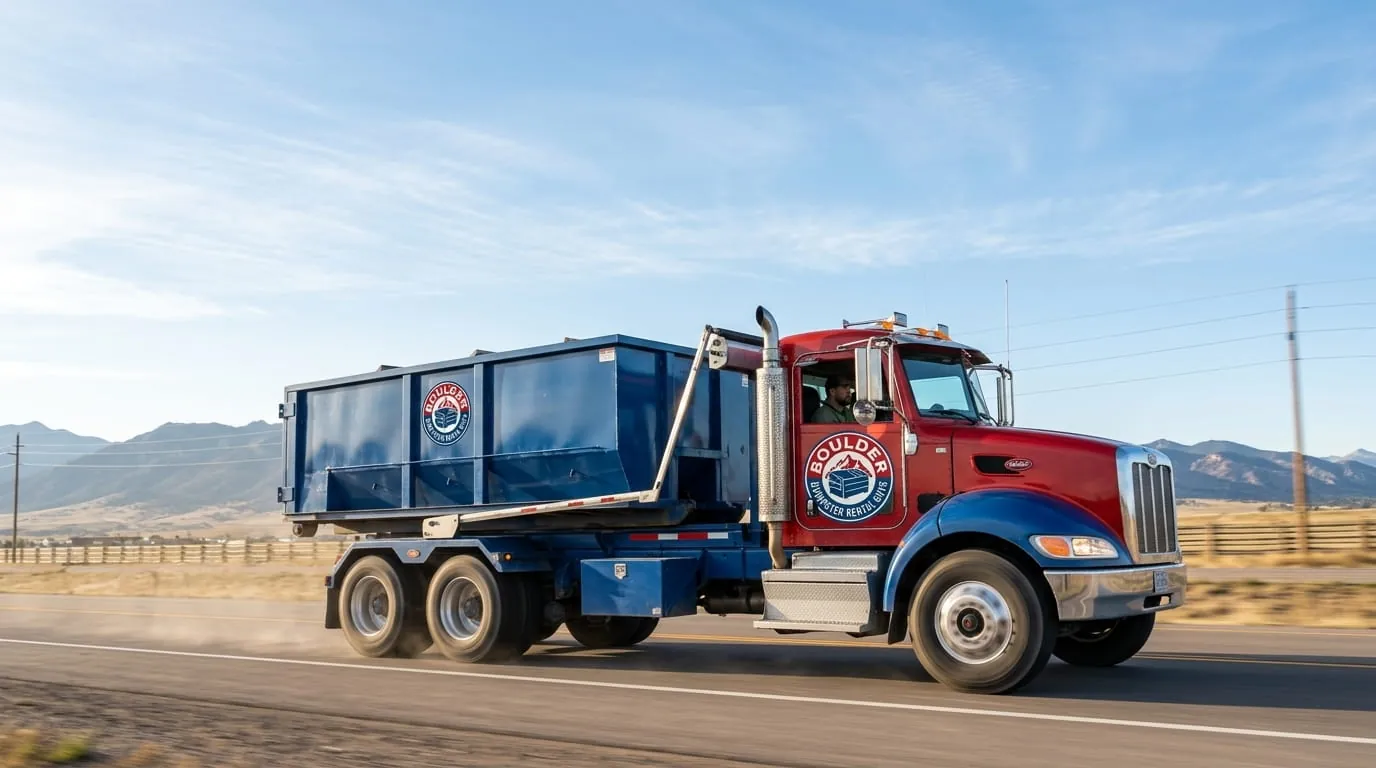
I've been dropping dumpsters in driveways from Gunbarrel to Nederland for a long time now, and the question I hear more than any other is some version of "how big a box do I actually need?" It's a fair question, and the honest answer is that most people either guess too small and end up calling for a swap halfway through, or they rent a monster and pay to haul air. Neither is fun. So let me walk you through how this works the way I'd explain it standing in your driveway, coffee in hand.
First, what a "cubic yard" actually means
Dumpster sizes are measured in cubic yards, and that trips people up because nobody thinks in cubic yards day to day. One cubic yard is a cube three feet on every side. Picture a washing machine, roughly. A little bigger, honestly, but that's the mental image that gets people close. So a 10-yard dumpster holds about ten of those cubes worth of volume, a 20-yard holds twenty, and so on.
Here's the part the size number doesn't tell you: the footprint on your driveway doesn't change nearly as much as you'd think. A 10-yard and a 20-yard take up almost the same length and width of ground. The bigger box is mostly taller and a bit longer. That matters if you're tight on space, worried about a low garage overhang, or dealing with an HOA that gets twitchy about how long a container sits out front. Don't assume the small one saves you much room. It doesn't.
The 10-yard: small footprint, heavy-hitter reputation
The 10-yard is the little guy, and it's the workhorse for heavy, dense material. A single bathroom gut. A small kitchen tear-out. Or the classic Front Range job: a concrete patio or a section of old flagstone walkway you're finally ripping up. Concrete, brick, tile, dirt, and roofing shingles are heavy enough that you'll hit the weight ceiling long before you fill the box to the brim. That's why the small container exists. You physically cannot pile enough concrete into a 20-yard without going way over what the truck can legally haul.
If your project is a garage cleanout or a bunch of bulky-but-light junk, though, the 10-yard fills up fast and disappoints. Think of it as the dense-debris box, not the general-purpose one. If you want the specs and pricing, our 10-yard dumpster page lays it out.
The 15-yard: the tweener that solves a lot of problems
Not every company offers a 15, but it's a genuinely useful size and I wish more folks knew about it. It splits the difference. A mid-size remodel, a big garage-and-basement purge, or a roof tear-off that's a little too big for the 10 but nowhere near needing a 20. When someone describes their project to me on the phone and I catch myself hemming between the 10 and the 20, the 15 is usually the right call. It gives you breathing room on volume without tempting you to overload it with heavy stuff.
The 20-yard: the one most homeowners actually want
If I had to bet on a single size for a typical Boulder County home project, it's the 20. It's the most-rented box for a reason. A full-house decluttering ahead of a move. Flooring pulled out of two or three rooms. A medium remodel with drywall, cabinets, and old fixtures. A mid-size roof. The 20 has enough volume that you're not playing Tetris with every piece of furniture, and its weight allowance is generous enough for mixed household debris.
The 20 also hits a sweet spot on driveway manners. It's tall enough to hold real volume but not so long that it swallows your whole parking pad. For most remodels and big cleanouts, this is where I'd start the conversation. You can see the details on our 20-yard dumpster page.
The 30-yard: big volume for big, light loads
The 30 is for scale. Whole-house renovations, new construction cleanup, a hoarder-level estate cleanout, or a commercial job where the debris is bulky and light. Framing lumber, packaging, insulation, old furniture by the truckload. The 30 gives you the height and the length to keep a crew moving without stopping to swap boxes.
Where people get burned on the 30 is filling it with the wrong material. This is a volume box, not a weight box. Load it up with dirt or concrete and you'll blow past the weight limit while it still looks half empty, and now you're paying overage fees on a container that isn't even full. Which brings me to the thing nobody warns you about.
The heavy-debris trap
This is the single most expensive mistake I watch homeowners make, so read this part twice. Every dumpster comes with a weight allowance included in the price, usually somewhere in the range of a few tons depending on the size. Go over that, and you pay by the ton for the excess. The trap is that heavy materials weigh far more than your eyes tell you.
A cubic yard of broken concrete can run well over two tons. Dirt is similar. Wet, rain-soaked drywall or a shingle tear-off gets heavy quick. So somebody rents a big 30-yard thinking bigger is safer, starts loading it with the old concrete patio, and gets it about a third full before the box is legally maxed out. Now they've paid for a huge container they can only partly use, plus overage on top.
The fix is simple: match the box to the material, not just the pile size. Heavy, dense stuff — concrete, brick, tile, dirt, asphalt, roofing — goes in a small container, usually the 10. Light, bulky stuff — furniture, cardboard, wood, general junk — goes in the bigger boxes where volume is the constraint, not weight. When in doubt, tell us what you're throwing away and we'll steer you right. A two-minute phone call has saved a lot of my customers a few hundred bucks.
Not sure which box fits your job? Call us at (970) 601-7836 and describe what you're tossing. We'll tell you straight, no upsell.
Weight limits, in plain English
When you book, ask two things: what's the included weight allowance, and what's the per-ton charge if you go over. A reputable outfit tells you both up front without you having to pry. If you're doing a clean, light load — a garage full of boxes and old furniture — you'll almost never sniff the weight limit, so you can focus purely on volume. If you're doing anything with masonry, dirt, or roofing, weight is your whole ballgame and volume barely matters.
One more field tip: keep loads level with the top rail. An overflowing, heaped-up box can't be legally or safely hauled down the road, and the driver may not be able to take it until it's leveled off. Fill it, but don't build a pyramid.
Front Range angles that change the math
Boulder isn't a generic anywhere-USA town, and a few local realities shift what size you should book.
Foothill remodels
If you're up in the foothills — Sunshine Canyon, Fourmile, out past Nederland — access is half the battle. Steep, narrow, or gravel driveways mean the driver has to think hard about where the box can safely sit and get picked back up. Sometimes a smaller container is the only thing that physically works on a tight mountain drive, even if your debris volume argues for a bigger one. When you call, mention the grade and the driveway surface. It genuinely affects what we can place and where.
Hail-damage roof tear-offs
We get hammered by hail on the Front Range, and after a big storm half of Boulder County is redoing roofs at once. Shingles are heavy. A typical tear-off is a job where the 10 or 15 shines, because you'll hit weight before volume every single time. Homeowners doing their own re-roof after a hail claim consistently reach for too big a box. Don't. For most single-family tear-offs, small-but-heavy-rated is the play.
CU move-outs
Come late spring, the University Hill and north Boulder rentals empty out and the curbs fill with abandoned couches, mattresses, particle-board furniture, and mountains of moving boxes. That's classic light-and-bulky debris, which means volume is king. A 20 or even a 30 makes sense for a whole-house student turnover, and for a landlord flipping a unit between tenants, one big box beats three small ones every time. Book early, though — mid-May and the end of the CU calendar are our busiest window and containers go fast.
My quick rule of thumb
Dense and heavy — concrete, dirt, tile, roofing — start at the 10. One or two rooms of remodel debris or a solid garage cleanout — the 15 or 20. Whole-house project, new construction, or a big light-and-bulky haul — the 20 or 30. And whenever weight and volume seem to be pulling you in different directions, the material wins. Size to what it weighs.
If you're still on the fence, that's exactly what we're here for. Tell us the project, the debris, and your driveway situation, and we'll match you to the right box the first time. Reach out through our contact page or just give us a call. Getting the size right up front is the difference between a smooth weekend and a frustrating one.

Founder, Boulder Dumpster Rental Guys — sharing straight advice from more than 15 years of local hauling experience.
Frequently Asked Questions
What size dumpster do I need for a small bathroom or kitchen remodel?
For a single bathroom gut or a small kitchen tear-out, a 10-yard dumpster usually does the job, especially since tile and old fixtures are heavy. If you're also pulling flooring from a couple of adjacent rooms, step up to a 15 or 20-yard so you have volume to spare.
Why does a 10-yard dumpster cost about the same as a bigger one sometimes?
Because you're often paying for the included weight allowance and the haul, not just the box size. Heavy materials like concrete and roofing hit the weight limit long before the container fills up, so the small box is priced for dense debris. Match the box to what your material weighs, not just how big the pile looks.
How much does a cubic yard of concrete or dirt weigh?
A cubic yard of broken concrete or dirt can weigh well over two tons. That's why you can only put dense material in a small dumpster before hitting the legal haul limit. If you try to load concrete into a 20 or 30-yard, you'll max out the weight while the box still looks half empty and pay overage fees.
What size dumpster is best for a hail-damage roof tear-off in Boulder?
For most single-family roof tear-offs on the Front Range, a 10 or 15-yard is the right call. Shingles are heavy, so you'll reach the weight limit before you run out of space. Renting a bigger box for a roof almost always means paying to haul air.
Can you place a dumpster on a steep foothill driveway?
Often yes, but access matters. Steep grades, narrow drives, and gravel surfaces affect where we can safely set and retrieve the container, and sometimes a smaller box is the only thing that works on a tight mountain driveway. Tell us the grade and surface when you call at (970) 601-7836 and we'll figure out the best placement.