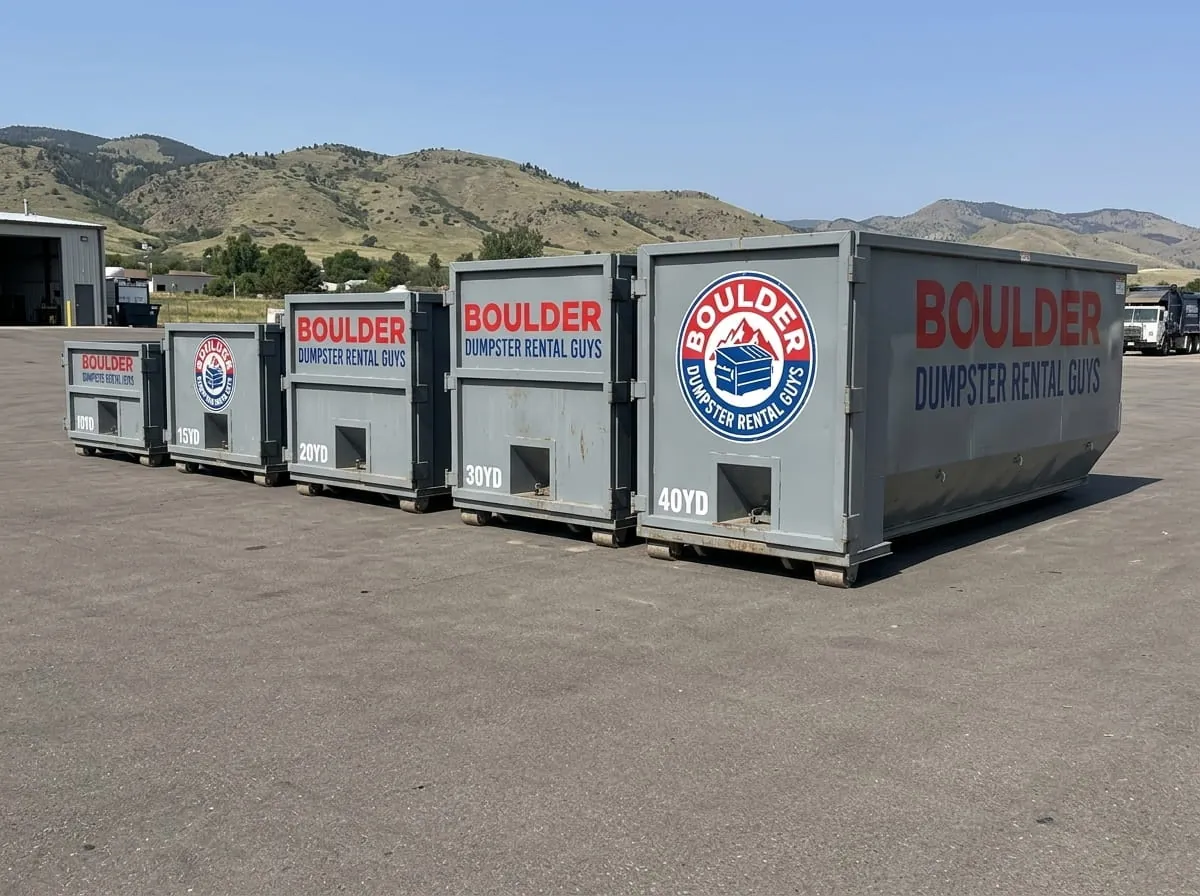
I have been dropping roll-off dumpsters on Front Range driveways for a long time now, and I can tell you the driveway is the part of the job most folks never think about until it is too late. People plan the cleanout, the roofing tear-off, the kitchen remodel. Nobody plans for the two hairline cracks that show up near the garage apron three weeks after the truck leaves. So let me walk you through what actually happens when a heavy container meets your driveway, and how to keep yours in one piece.
Why a roll-off is so hard on a driveway
Start with the weight. An empty steel roll-off in the common residential sizes runs somewhere between 3,000 and 6,000 pounds before you throw a single thing in it. Fill it with shingles, wet drywall, concrete chunks, or dirt and you can be looking at 8,000 to 20,000 pounds sitting in one spot for a week. That is a lot of load, but the weight alone is not the real problem. The problem is how that weight gets concentrated.
A dumpster does not rest flat like a patio slab. It sits on two long steel rails and a set of small rear wheels. All that tonnage funnels down through a handful of narrow contact points, and the pressure per square inch at those points is enormous. Then add the delivery itself. When the truck rolls the box off the back, the rear wheels drag and pivot across your surface, and when it picks the empty box back up, those same wheels claw for grip. That drag is where most of the gouging and scraping happens.
Heat makes it worse. On a hot Boulder afternoon in July, asphalt gets soft. I have seen a container leave two rail-shaped dents in a blacktop driveway simply because it sat there through a heat wave and the asphalt slowly gave way underneath it. Concrete does not soften, but concrete cracks, and a slab that already has a weak spot or a shallow pour will find it under load.
Cracking versus staining, two different fights
Driveway damage comes in two flavors and you defend against them differently.
Cracking is a load problem. It comes from too much weight on too small an area, or from a slab that was never thick enough to begin with. The fix is to spread the load out so no single point takes the full hit.
Staining is a chemistry problem. Steel containers rust, and rust bleeds. Set a damp steel rail on light concrete for seven days and you can pull the box to find two rust-orange stripes that no amount of scrubbing fully removes. Hydraulic fluid, roofing tar dripping off debris, and paint from a remodel all stain too. Staining will not weaken your driveway, but it will bother you every time you pull in for the next ten years.
The simple answer: get something between the box and your surface
The single most effective thing you can do is put a barrier under the container. This is not fancy. Plywood and dimensional lumber do the job, and any careful hauler either brings them or is glad to see you have them ready.
Here is the setup I recommend for a standard residential drop. Lay down two-by material or, better, sheets of three-quarter-inch plywood where the steel rails will land. The plywood spreads the rail load across a much wider footprint, which is exactly what stops the point-pressure cracking. Under the rear wheels, where the drag and pivot happen during delivery and pickup, I like a second layer or a doubled-up board. Those wheels are the grinders, so give them the thickest cushion you have.
A few practical notes from doing this the hard way. Use full sheets, not scraps that shift around. Two layers of half-inch plywood beat a single sheet because the layers flex independently and distribute better. Keep the boards clean and dry going down; a wet board traps moisture against your concrete and can leave its own mark. And tell your driver the boards are there and where you want the box to land before the truck backs in, because once that container starts rolling off it is not easy to reposition.
Surface by surface: concrete, asphalt, and pavers
Concrete is the toughest of the three, but it is not bulletproof. A well-poured four-inch residential slab handles a normal loaded container fine when you board under the rails. Where concrete gets you is the edges, the control joints, and the apron by the garage where slabs are thinnest and most likely to be undercut by settling soil. Keep the container off joints and edges, center it on the strongest part of the pad, and board it. Rust staining is the bigger day-to-day risk with concrete because the light surface shows every mark.
Asphalt is the one I worry about most in summer. It is softer, it moves with heat, and it dents rather than cracks. On blacktop I always board, I always use extra padding under the wheels, and I try hard to schedule delivery and pickup for cooler parts of the day when the surface is firm. If your asphalt is more than a few years old and already showing some crocodile cracking, tell your hauler up front so we can plan placement around the weak areas.
Pavers are their own animal. A paver driveway is dozens of individual units sitting on a sand-and-gravel base, and heavy point loads can push individual pavers down, pop them up at the edges, or rut the base underneath so the whole field goes wavy. Honestly, for pavers I usually steer people toward a different spot entirely, the street or a gravel pad, if one is available. If the box truly has to go on pavers, we lay a solid continuous plywood platform, not just boards under the rails, so the load bridges across many units at once. Even then I set expectations that a paver drive is the highest-risk surface.
Boulder-specific placement: gravel, slopes, and foothill driveways
Around here the driveway is rarely a flat, tidy rectangle. We have long gravel drives up in the foothills, steep pitches off the canyon roads, and plenty of homes where the only flat ground is the street.
On gravel, the concern flips from cracking to sinking and rutting. A loaded box on loose gravel can dig in and settle, especially after one of our afternoon storms soaks the base. On gravel I want a wide plywood or heavy-plank platform to float the load, and I want to avoid dropping right after heavy rain. Firm, compacted gravel takes a container fine; soft, freshly graded gravel does not.
On a slope, and Boulder has no shortage of them, the issue is the box wanting to roll and the load shifting to the low end. A good driver chocks the wheels, sets the container so the door end faces downhill for easier loading, and never places a roll-off on a grade steep enough that it cannot be safely secured. If your driveway pitches hard, mention it when you book so we bring the right truck and enough chocks.
On foothill and canyon driveways with tight turns, overhanging trees, and soft shoulders, placement is as much about access as protection. Sometimes the smartest move is to stage the dumpster at the flat bottom of the drive rather than muscling it up to the house. It means a slightly longer walk with your debris, but it saves both your driveway and a lot of hassle.
Not sure which surface you are working with or where the box should go? Call us at (970) 601-7836 and describe your driveway. We will tell you honestly whether to board it, move it to the street, or stage it lower, before the truck ever shows up.
What a good hauler actually does
You should not have to manage all of this yourself. A hauler who respects your property does most of it automatically. When we handle a residential dumpster rental, we ask about your surface and your slope when you book, not when we arrive. We carry boards. We place the box gently instead of dropping it hard. We keep the rear wheels off soft or delicate spots during the roll. And we pick up clean, without dragging the empty box across your slab.
Size matters here too. Do not order a bigger box than you need, because a larger container has a longer, heavier footprint and more ways to load it past what your driveway wants to hold. For a lot of home projects a 15-yard dumpster is the sweet spot: enough room for a garage cleanout or a bathroom remodel, but a compact footprint that is easy to board and easy to place on a normal drive. Right-sizing the container is quietly one of the best driveway-protection moves you can make.
A quick pre-delivery checklist
Before the truck arrives, do these five things and you will avoid almost every driveway problem I have ever cleaned up after:
- Clear the drop zone of cars, toys, hoses, and anything the box could crush.
- Have plywood or two-by boards staged where the rails and wheels will land.
- Know your surface and tell the hauler: concrete, asphalt, pavers, or gravel.
- Flag any slope, soft spot, or thin apron so the driver can plan around it.
- Decide on a backup spot, usually the street, in case the driveway is a bad fit.
The bottom line
A dumpster on your driveway is a lot of concentrated weight sitting still for a week and dragging on the way in and out. Cracks come from load, stains come from steel and drips, and both are almost entirely preventable. Board under the rails and wheels, keep the box off joints and edges, respect the surface you have, and think carefully about gravel and slopes if you live up toward the hills. Work with a hauler who plans for your driveway instead of gambling on it, and when the box leaves, your driveway looks exactly like it did before it came. If you want a hand thinking any of this through, reach out and we will walk your project with you.

Founder, Boulder Dumpster Rental Guys — sharing straight advice from more than 15 years of local hauling experience.
Frequently Asked Questions
Do I really need to put boards under a dumpster on concrete?
For most healthy four-inch concrete slabs, boards are cheap insurance rather than an absolute must, but I always recommend them. Plywood under the rails spreads the load and, just as important, keeps the steel from leaving rust stains on your light concrete. If your slab is old, thin, near a control joint, or sits on settling soil, boards move from optional to essential.
Will a dumpster crack my asphalt driveway in summer?
It can if you are not careful. Asphalt softens in Boulder's summer heat and dents under concentrated weight instead of cracking like concrete. We prevent this by boarding under the rails, adding extra padding under the rear wheels, and scheduling delivery and pickup for cooler parts of the day when the blacktop is firm. Tell us if your asphalt already has cracking so we can place the box on the strongest area.
Can you put a roll-off dumpster on a gravel or foothill driveway?
Yes, and we do it all the time. On gravel the risk is sinking and rutting rather than cracking, so we float the load on a wide plywood platform and avoid dropping right after heavy rain when the base is soft. On steep foothill drives we chock the wheels and sometimes stage the container at the flat bottom of the driveway. Just tell us about the surface and slope when you book.
What about a paver driveway?
Pavers are the highest-risk surface because each unit sits on a sand base and heavy point loads can push pavers down or rut the base underneath. If it can be avoided, we suggest placing the box on the street or a gravel pad instead. If it must go on pavers, we lay a continuous solid plywood platform so the weight bridges across many units at once, and we set honest expectations about the risk.
Who is responsible if my driveway gets damaged?
A reputable hauler takes responsibility for placement done carelessly, which is exactly why we ask about your surface and slope before delivery and why we board and place the box gently. That said, no one can guarantee a driveway that was already cracked, thin, or failing. The best protection is a conversation up front: call us at (970) 601-7836, describe your driveway, and we will tell you honestly how to protect it or where to put the box instead.