After enough years hauling loads out of homes across Boulder and up into the foothills, you learn one thing fast: a cleanout almost never fails because the work is hard. It fails because people start in the wrong place, run out of steam by lunch, and end up with a garage full of "maybe" piles that sit there another six months. A whole-home cleanout is a project, not a chore. Treat it like one and it goes smooth. Wing it, and you'll be tripping over the same broken patio chair next spring.
This is the checklist we walk homeowners through when they call us before a big clear-out. It's room by room, it's honest about what actually takes up space in a container, and it's written for Boulder homes specifically. Whether you're helping a CU student empty out an apartment at the end of a lease, settling a parent's estate, or finally reclaiming a foothill basement that's been collecting boxes since the last decade, the order of operations is the same.
Before you touch a single box: the three-pile rule
Every item in the house lands in one of three piles. Keep. Donate. Toss. That's it. The mistake almost everyone makes is inventing a fourth pile called "I'll decide later," and later never comes. Decide in the moment.
- Keep means it has a real home to go back to and you've used it in the last year. Not "might use." Used.
- Donate means it works, it's clean, and someone in Boulder County would genuinely want it. ARC Thrift on 28th, Boulder Community Free Store, and Habitat ReStore all take good household goods. Furniture in decent shape, working appliances, unopened supplies.
- Toss is everything broken, stained, expired, or so worn out that donating it just makes it someone else's problem.
Grab a few contractor bags, a marker, and painter's tape before you start. Label rooms as you clear them so nothing migrates back. And set the container up in the driveway first, because a dumpster sitting ten feet from the door changes how ruthless you're willing to be. When the toss pile has somewhere to go, you stop second-guessing every lamp.
Kitchen: start here, it builds momentum
The kitchen is the best first room because the decisions are easy and the wins are obvious. Nobody gets sentimental about a warped cutting board. Pull everything out of the cabinets and pantry. Expired cans, mystery Tupperware with no lids, the third colander, small appliances you bought for one recipe in 2019 — toss or donate. Old cookware and dishes that still work go to donate. Anything cracked, chipped, or missing parts goes in the container.
Watch for the stuff that shouldn't go in a dumpster at all: cleaning chemicals, oven cleaner, half-full paint from a backsplash project. Those are household hazardous waste. Boulder County runs a HHW facility off 63rd Street — set those items aside in a box for a separate trip. Everything else, the boxes and the busted gear, that's dumpster material.
Bedrooms and closets: the honesty rooms
Closets are where the "later" pile wants to be born. Clothes are tricky because they're light and they compress, so people underestimate the volume until they've got twelve trash bags stacked by the door. Be direct with yourself. If it doesn't fit, it's stained, or you haven't worn it in two seasons, it's out. Wearable clothing donates easily. Textiles that are too far gone — ripped, moldy, single socks — go in the bin.
Under the bed and the top closet shelf are where the real archaeology happens. Old bedding, decades of paperwork, electronics with no chargers, boxes you moved into the house and never opened. Mattresses are their own thing — they don't compress and they eat container space, so plan for a couple of them if you're doing a full home. We'll get to sizing in a minute.
Bathrooms: small room, fast clear
Bathrooms go quick. Expired medications should go to a pharmacy take-back, not the trash. Everything else — old towels too rough to donate, cracked shower caddies, a decade of half-used toiletries, the scale that never worked — clears out in twenty minutes. If you're doing a light remodel at the same time, old vanities, mirrors, and shower doors are bulky and go straight in the container.
Living areas and the garage, attic, basement trifecta
Here's where a cleanout gets real. The living spaces themselves usually aren't bad — furniture you're replacing, a busted entertainment center, an old rug. The volume lives in the three storage zones every Boulder home seems to have: the garage, the attic if you've got one, and the basement.
These three are where most of the weight and bulk of a whole-home cleanout comes from, so give them the most time.
The garage
Garages collect the heavy stuff. Old paint (again, HHW), dead lawn equipment, warped plywood scraps, bikes nobody rides, tires — and tires are worth flagging because most haulers charge separately for them and they can't go in a regular landfill load. Set them aside and ask. Broken tools, cracked storage totes, and the seasonal decorations that got water-damaged all go in the bin. If a mountain bike or a set of skis still has life in it, Boulder's got a strong secondhand market. Sell it or donate it before it hits the toss pile.
The attic
Attics are all boxes and insulation dust, so wear a mask. This is memory-lane territory, which means it's the slowest room emotionally even though there's not much heavy lifting. Old furniture stored "just in case," holiday decorations, and boxes of paperwork. Set a timer for the nostalgia. Keep the genuinely irreplaceable, photograph the rest, and let it go.
The basement
Foothill and older Boulder homes love a full basement, and full is the operative word. Basements flood, and water-damaged anything — carpet, cardboard, furniture, drywall from an old leak — is not worth saving. This is often the single biggest source of dumpster volume in the whole house. Damp cardboard, ruined storage, old exercise equipment, and the furniture that got exiled down there. Clear it methodically, corner by corner, and don't carry anything back upstairs.
What size dumpster for a whole-home cleanout?
This is the question we get more than any other, and the honest answer is that it depends on the size of the house and how much has accumulated. But we can get you close.
- 10 yard: A single room, a small apartment, or a targeted garage or basement clear-out. Good for a CU move-out from a shared unit.
- 15 yard: Two or three rooms, or a heavy single-space job with furniture.
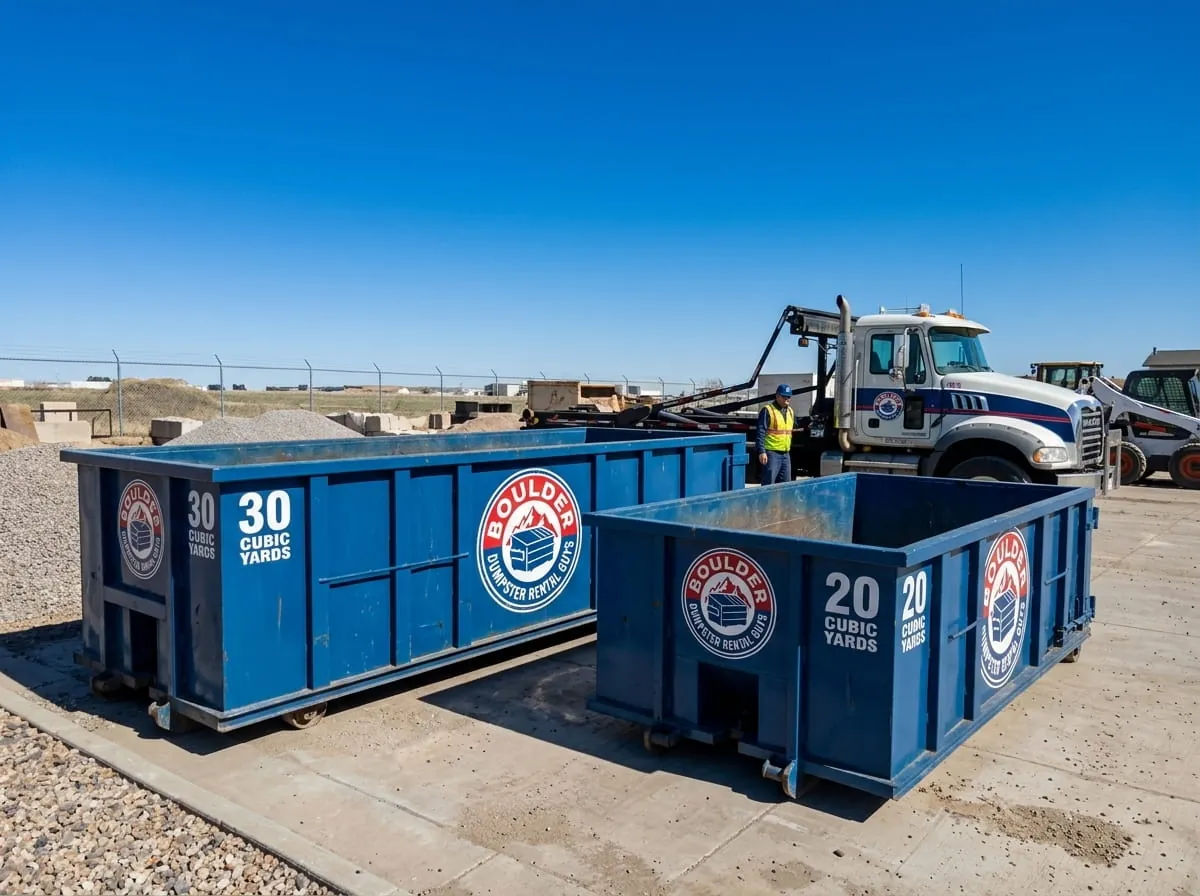
- 20 yard: This is the workhorse for a genuine whole-home cleanout. A two-to-three bedroom Boulder home, garage and basement included, usually lands right in this range. It's the size we recommend most often for full cleanouts.
- 30 yard: Large foothill homes, estate cleanouts, or anytime there's a lot of bulky furniture and a finished basement's worth of storage.
For most families doing a full house, the 20 yard dumpster is the sweet spot — enough room that you're not rationing, without paying for capacity you won't fill. If you're not sure, size up one step. It costs less to have a little extra room than it does to fill a container, realize you're short, and pay for a second haul.
Not sure which container fits your job? Call Boulder Dumpster Rental Guys at (970) 601-7836 and describe the house — we'll tell you straight what size you actually need, no upselling.
The CU move-out angle
End of the academic year in Boulder is its own kind of chaos. Leases turn over, students scatter, and the curbs around The Hill and Baseline fill up with abandoned couches. If you're a landlord flipping a unit or a parent helping a kid clear out, the play is to book the container before the last week of the lease, not during it. Everyone waits until the deadline, and availability tightens fast in May. A smaller container often does the trick for a single apartment, and same-day junk removal is the move when there's just a handful of heavy items — a couch, a mattress, a broken desk — and you don't want a bin sitting in the lot.
The foothill-home angle
Homes up in the foothills come with a wrinkle flatland homes don't: access. Narrow driveways, steep grades, tight switchbacks, and HOA rules about how long a container can sit visible. Before we drop a dumpster in Sunshine Canyon or up toward Nederland, we talk through where the truck can actually turn around and set down. A few things that matter up there:
- Confirm the driveway can take the weight of a loaded container and a delivery truck. Gravel and steep grades change the plan.
- Check your HOA or covenant for placement and duration rules before it arrives.
- If wildfire mitigation is part of your cleanout — clearing brush, old woodpiles, defensible-space debris — tell us up front, because green waste and construction debris sometimes need to be kept separate.
None of this is a dealbreaker. It just means a foothill cleanout rewards a phone call before delivery instead of a surprise on the day.
A realistic timeline
People ask how long a whole-home cleanout takes. For an average Boulder home with two or three people working, plan on a weekend. Kitchen and bathrooms Saturday morning to build momentum. Bedrooms and closets Saturday afternoon. Save the garage, attic, and basement for Sunday when you've got a rhythm going and you're less precious about what stays. Keep the container in the driveway the whole time so the toss pile never becomes a floor pile.
When to call in help
Some jobs are a container and a couple of weekends. Others — an estate, a hoarding situation, a home you're prepping for sale on a deadline — are more than a family should take on alone. That's what we're here for. If you'd rather not lift the heavy stuff yourself, our team handles the loading. If you just want the right container in the driveway and you'll do the rest, that works too.
Either way, the checklist above is the same. Three piles, easy rooms first, save the storage zones for last, and size the container to the whole house instead of the room in front of you. Do that, and the job you've been dreading for years turns into a long weekend and a clean, empty house. When you're ready, reach out and we'll get you set up.

Founder, Boulder Dumpster Rental Guys — sharing straight advice from more than 15 years of local hauling experience.
Frequently Asked Questions
What size dumpster do I need for a whole-home cleanout in Boulder?
For a typical two-to-three bedroom Boulder home with the garage and basement included, a 20 yard dumpster is the size we recommend most often. Smaller apartments or single-room jobs can work with a 10 or 15 yard, while large foothill homes and estate cleanouts often need a 30 yard. If you're between sizes, go up one step — a little extra room costs less than a second haul. Call (970) 601-7836 and describe the house and we'll size it for you.
What can't go in the dumpster during a cleanout?
Household hazardous waste stays out — paint, oven cleaner, pesticides, and other chemicals go to Boulder County's HHW facility off 63rd Street. Tires usually carry a separate fee and can't go in a standard landfill load, so set them aside and ask. Expired medications should go to a pharmacy take-back. Everything else — furniture, boxes, worn textiles, remodel debris — is fair game for the container.
Where should I start a room-by-room cleanout?
Start in the kitchen. The decisions are easy and unemotional, so you build momentum fast. Move to bathrooms, then bedrooms and closets, and save the garage, attic, and basement for last — those storage zones hold the most volume and the most 'maybe' items, so you want a rhythm going before you tackle them.
Do you handle CU student move-outs at end of lease?
Yes. End of the academic year gets busy fast around The Hill and Baseline, so book the container before the final week of the lease rather than during it. A smaller container usually covers a single apartment, and same-day junk removal is the better move when it's just a couch, mattress, and a few heavy items you don't want sitting in the lot.
Are there special considerations for foothill homes?
Access is the big one. Narrow, steep, or gravel driveways affect where the truck can set the container down, and many foothill HOAs have rules about placement and how long a bin can sit visible. If wildfire mitigation is part of your cleanout, mention it up front since green waste sometimes needs to stay separate from construction debris. A quick phone call before delivery sorts all of this out.